
A Unique Australian Native Plant
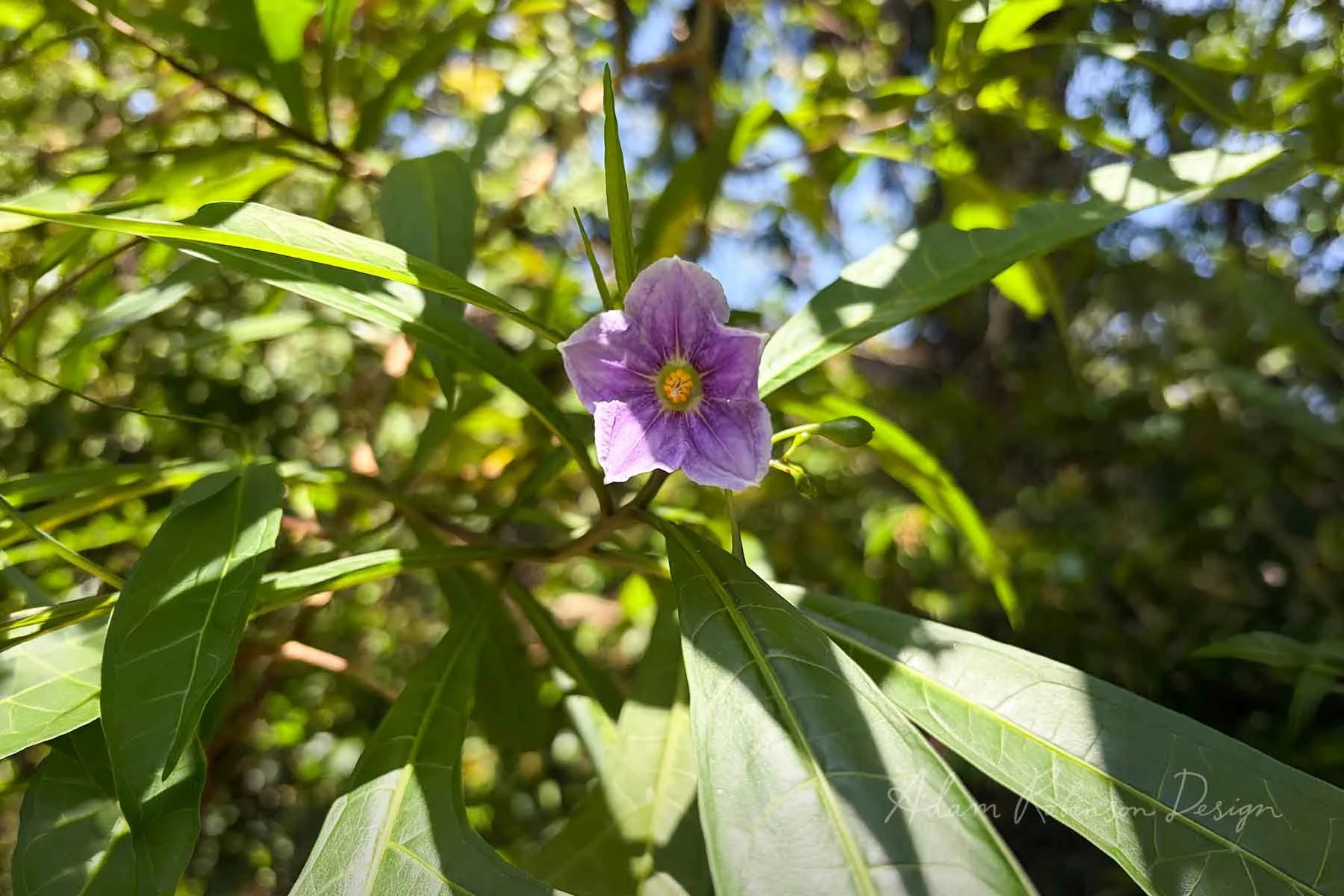
There is something wonderfully wild about the Kangaroo Apple. At Adam Robinson Design we love learning about our uniquely wonderful native plants.
A fast-growing, fruiting shrub native to southeastern Australia and New Zealand, Solanum aviculare is one of those plants that feels equally at home in a garden or at the edge of the bush. Give it sun, a little moisture and reasonably well-drained soil and it will happily get on with things - even in poor soil, through periods of drought and light frost.
And it doesn’t think small.
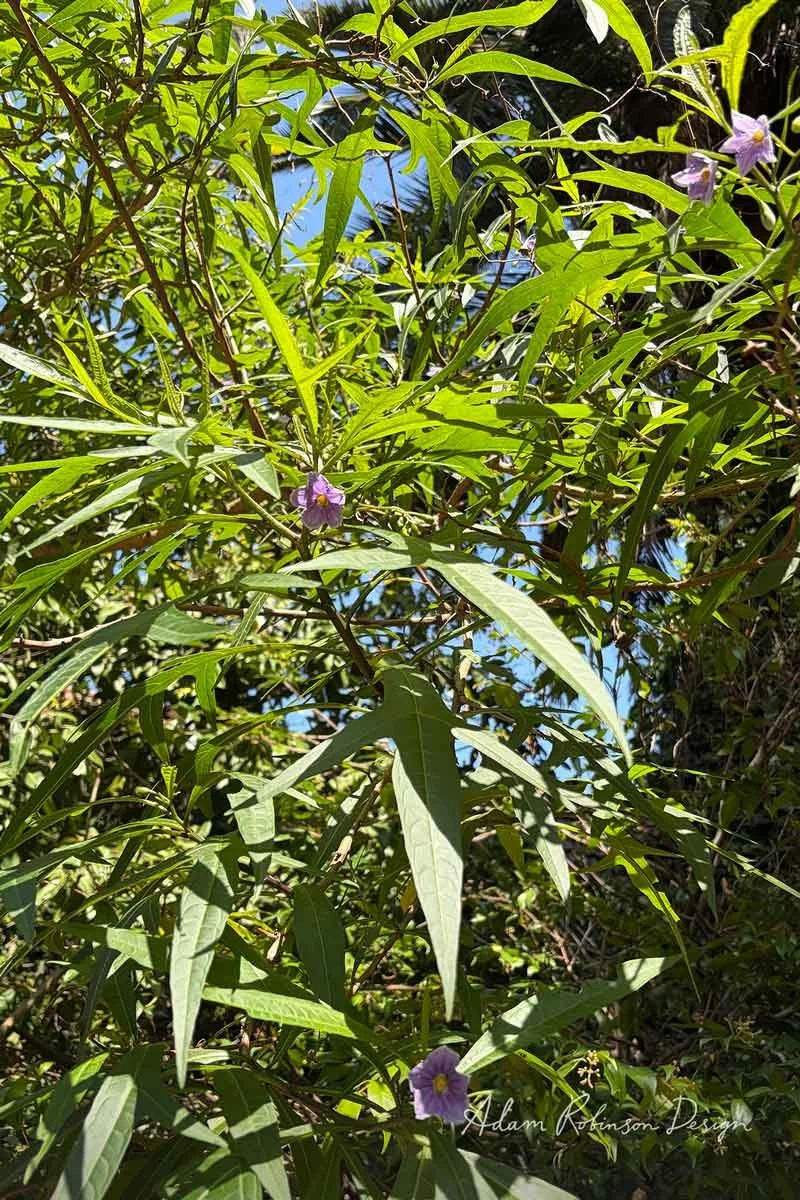
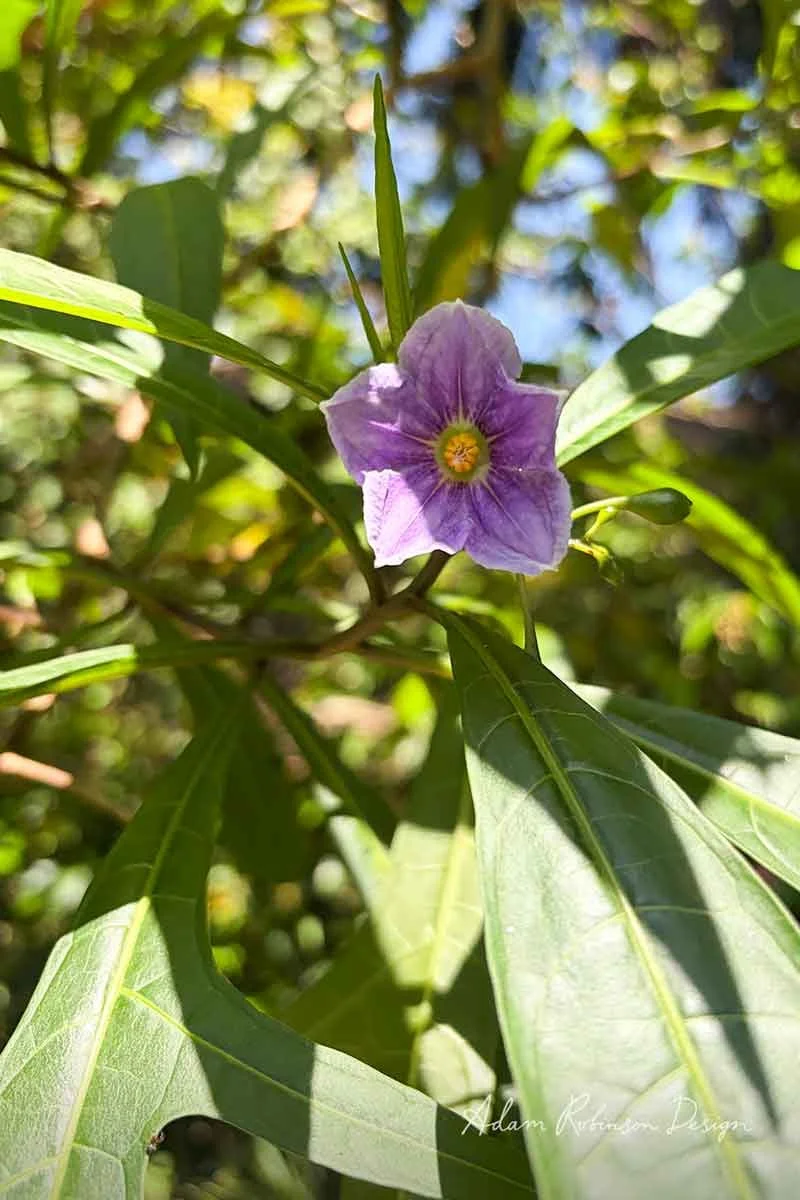
A Kangaroo Apple can reach around 4 metres high and spread to 5 metres wide, making it a generous presence in the garden. Its large, deeply lobed leaves are said to resemble a kangaroo’s paw, giving this curious plant its charming common name.
Then come the fruits.
Small and oval, they begin life green before slowly blushing into shades of yellow, orange and red. When fully ripe, they are glossy-skinned, juicy and softly sweet, with a subtle tang and a hint of melon. Inside, hundreds of tiny pale seeds are packed into the flesh.
But there is an important rule with this fruit: wait for the blush.
Unripe Kangaroo Apples are toxic and should not be eaten. The fruit is only considered edible when it has fully ripened, softened and turned orange-red. In some places, the plant is also known as Bush Tomato, although this name can refer to several different native Solanum species.
A plant with a long story
Long before it found its way into gardens, the Kangaroo Apple was part of Aboriginal life across southeastern Australia.
For Aboriginal communities in New South Wales, Victoria and Tasmania, the fruit was an important seasonal food. The Guinei people of Gippsland are said to have used fire to manage areas where the plants grew, encouraging fresh growth and helping extend the fruiting season.
The plant has many names across Aboriginal languages, including Bullibulli, Mookitch and Mayakitch.
Its story extends beyond food, too. Traditional uses included preparations for a range of ailments, with the plant associated with remedies for inflammation, swollen joints, skin sores, wounds, itching, boils and ulcers.
Today, the Kangaroo Apple remains an intriguing plant for the edible garden — part food, part history, part wild garden magic.
Where it grows
In its native habitat, Kangaroo Apple is a plant of edges and openings.
It grows in sunny coastal areas, shrublands, gullies, forests and along rivers, and is particularly quick to colonise disturbed ground and areas recovering from fire. Birds help spread its seeds, carrying the plant into new territory.
It is adaptable, vigorous and sometimes considered invasive outside its native range.
The species was recorded by German naturalist Georg Forster in 1786 during Captain Cook’s second voyage, and was later described by William Aiton, botanist and gardener to King George III, in 1789.
By the twentieth century, its story had travelled much further afield. During the 1970s, Kangaroo Apple attracted interest in Russia and Hungary as a source of compounds used in the manufacture of contraceptive drugs and cortisone.
Today it is mostly grown by home gardeners, collectors and specialty plant enthusiasts - sometimes from seed, sometimes foraged, and occasionally found at farmers’ markets in its native regions.
In the garden
Kangaroo Apple is a wonderfully unfussy plant for the right climate and would work well in any residential landscape design.
Plant it somewhere sunny with moisture-retentive but well-drained soil and give it room to grow. It is particularly suited to temperate and subtropical gardens, where its fast growth, generous foliage and colourful fruit can bring a distinctly Australian character to the landscape.
And when those green fruits begin to turn red?
That is when the Kangaroo Apple really earns its name — a little wild, a little strange, and very much at home in any garden design.
_







A Unique Australian Native Plant
A fast-growing Australian native with sculptural foliage, colourful fruit and a rich cultural history that brings character to contemporary garden design.